Sarah had been living with anxiety and depression for years, and after a serious health episode, she found herself increasingly isolated at home. Her confidence had eroded, and the thought of leaving the house to meet people felt overwhelming. When her NDIS plan was approved, her Support Coordinator suggested that NDIS social support could be the bridge back to the community she once knew. Within weeks of starting regular social activities, Sarah noticed something shift. She was laughing more, sleeping better, and beginning to feel like herself again. This is not an unusual story. For many NDIS participants, structured social support is not just about filling time—it is a lifeline that directly improves mental wellbeing, reduces isolation, and rebuilds the confidence needed to participate fully in everyday life.
According to the NDIS Quarterly Report (December 2023), over 610,000 Australians are active NDIS participants, with social and community participation consistently identified as a priority goal area. Yet despite this, the Australian Institute of Health and Welfare (AIHW) reports that people with disability are twice as likely to experience social isolation compared to the general population, highlighting the critical role of funded social supports. This article explains how NDIS social support works, how it fits into your plan, and how it can make a measurable difference to your mental health and quality of life.
What Is NDIS Social Support?
NDIS social support refers to assistance provided to help you engage with others, participate in community activities, and build meaningful social connections. It is funded under the NDIS (Supports for Participants) Rules 2013 as part of your Core Supports budget, specifically under support item 04: Assistance with Social and Community Participation. This category covers a wide range of activities designed to reduce isolation, improve social skills, and support your mental and emotional wellbeing.
Social support can be delivered one-on-one or in group settings, depending on your goals and preferences. It might involve attending community events, joining social groups, participating in recreational activities, or simply having a support worker accompany you to a café or park to practice social interaction in a safe, supportive environment. The focus is always on how community connection enriches daily life, not just what you do, but how those activities help you feel more confident, connected, and capable.
Under the National Disability Insurance Scheme Act 2013 (Cth), supports must be reasonable and necessary. This means that social support must relate to your disability, help you pursue your goals, and represent value for money. The National Disability Insurance Agency (NDIA) assesses whether social support is appropriate based on your individual circumstances, goals, and the impact of your disability on your ability to participate in the community.
How Social Support Fits Into Your NDIS Plan
Your NDIS plan is divided into three main budget categories: Core Supports, Capacity Building, and Capital Supports. Social and community participation supports fall under Core Supports, which means you have flexibility in how you use this funding. Core Supports are designed to help you with your daily living needs, and social connection is recognised as a fundamental part of living well.
When you meet with your NDIS planner or Local Area Coordinator (LAC), you will discuss your goals and how social support can help you achieve them. For example, if one of your goals is to reduce feelings of loneliness or rebuild your confidence after a period of hospitalisation, your planner may allocate funding specifically for social and community participation. This funding can then be used to engage a registered NDIS provider like Aus Care Community Services to deliver tailored social support that aligns with your needs.
It is important to understand that Core Supports are flexible. This means you can choose how to allocate your funding across different Core categories, including assistance with daily personal activities, transport, and social participation. If you are unsure how to structure your plan or which supports to prioritise, a complete guide to NDIS services can help you understand the full range of options available to you.
The Mental Health Benefits of Regular Social Connection
The link between social connection and mental wellbeing is well established. For people with disability, who are statistically more likely to experience isolation, the impact of regular social interaction can be profound. NDIA data shows that participants who regularly engage in community activities report higher satisfaction with their NDIS plans and improved overall wellbeing outcomes.
Social support helps reduce feelings of loneliness and anxiety by providing structure, routine, and a sense of belonging. When you participate in regular social activities, you are not only building relationships—you are also developing social skills, increasing your confidence, and creating positive experiences that contribute to your mental health. For many participants, this is the difference between feeling disconnected and feeling like a valued member of their community.
Providers who deliver trauma-informed, person-centred support understand that mental wellbeing is not built overnight. It requires consistency, trust, and a genuine commitment to understanding what matters to you. This is how providers build sustainable quality of life—by showing up regularly, listening to your needs, and adapting support as your goals evolve.
Social support also provides an opportunity to practice coping strategies in real-world settings. Whether it is managing social anxiety in a group environment or learning how to initiate conversations, these experiences build resilience and help you feel more capable in everyday situations. Over time, this can lead to greater independence, improved self-esteem, and a stronger sense of control over your life.
What Activities Are Funded Under Social Support?
The range of activities funded under NDIS social support is broad, and the key is that they must be reasonable and necessary in relation to your disability and goals. Common examples include attending community events, joining social or recreational groups, visiting museums or galleries, participating in sports or fitness activities, or simply spending time in public spaces with the support of a trained worker.
Group-based activities are often more cost-effective than one-on-one support, and the NDIS Pricing Arrangements and Price Limits set specific rates for group social and community participation. Group settings also provide opportunities to meet other participants, share experiences, and build friendships in a supportive environment. However, if you prefer individual support or your disability requires one-on-one assistance, that is also a valid and fundable option.
It is important to note that NDIS funding cannot be used for activities that are considered day-to-day living costs for all Australians, such as the cost of a movie ticket or a meal. However, the support worker’s time to assist you to attend, participate, and engage in that activity is funded. If you are unsure what NDIS funding can be used for, your Support Coordinator or provider can help clarify what is reasonable and necessary under your plan.
Community Reintegration: Rebuilding Confidence and Independence
Community reintegration is a specialised form of social support designed for participants who have experienced significant isolation, hospitalisation, or a major life change that has disrupted their connection to the community. It focuses on rebuilding confidence, re-establishing routines, and gradually increasing your participation in social and community activities.
This type of support is particularly relevant for participants who may have withdrawn from social life due to mental health challenges, trauma, or the progression of their disability. Community reintegration is not about forcing participation—it is about creating a safe, supportive pathway back into the community at a pace that feels manageable for you.
Under the NDIS (Supports for Participants) Rules 2013, community reintegration is considered reasonable and necessary if it helps you achieve your goals and addresses the impact of your disability on your ability to participate in everyday life. Your NDIS planner or Support Coordinator will assess your circumstances and determine whether this support is appropriate for your plan. If approved, your provider will work with you to develop a gradual, person-centred approach that respects your comfort level and builds your confidence over time.
How to Access Social Support in Your NDIS Plan
If you are preparing for your first NDIS planning meeting or a plan review, it is important to clearly communicate your social and community participation goals. Be specific about how your disability affects your ability to connect with others, and explain what kind of support would help you participate more fully in your community.
You might say, for example, that you experience social anxiety and would benefit from support to attend group activities, or that you have been isolated at home and need assistance to rebuild your confidence and re-engage with your local community. The more clearly you can articulate your needs and goals, the more likely it is that your planner will allocate appropriate funding for social support.
If you are new to the NDIS and unsure where to start with the NDIS, consider speaking with a Support Coordinator. Support Coordination is a Capacity Building support that helps you understand your plan, connect with providers, and make informed decisions about the supports you need. If you are finding it difficult to navigate the system or access the right services, you may want to explore whether you need Support Coordination to help you get the most out of your plan.
Accessing NDIS Social Support in South West Sydney
South West Sydney is home to a diverse and vibrant community, with participants living across local government areas including Parramatta, Blacktown, Canterbury-Bankstown, Liverpool, Cumberland, and Georges River. Accessing quality social support in these areas means working with a provider who understands the local community, knows where activities and resources are located, and can tailor support to your cultural and personal preferences.
Aus Care Community Services has been supporting NDIS participants across South West Sydney since July 2017, and as one of the first registered NDIS providers in the region, we have built strong connections with local community groups, recreational facilities, and social programs. This local knowledge allows us to offer social support that is not only person-centred but also deeply connected to the places and people that matter to you.
Whether you live in Georges Hall, Bankstown, Parramatta, or surrounding suburbs, accessing social support should feel straightforward and responsive. Registered providers are required to comply with the NDIS Practice Standards and the NDIS Code of Conduct, which means you can expect professional, respectful, and safe support that prioritises your rights and wellbeing at all times.
How Aus Care Community Services Delivers Person-Centred Social Support
At Aus Care Community Services, we understand that social support is not one-size-fits-all. Every participant has different goals, preferences, and comfort levels, and our role is to listen, adapt, and deliver support that genuinely reflects what matters to you. Our team is trained in trauma-informed care, which means we recognise that past experiences can affect how you engage with others, and we create a safe, non-judgmental space where you can rebuild confidence at your own pace.
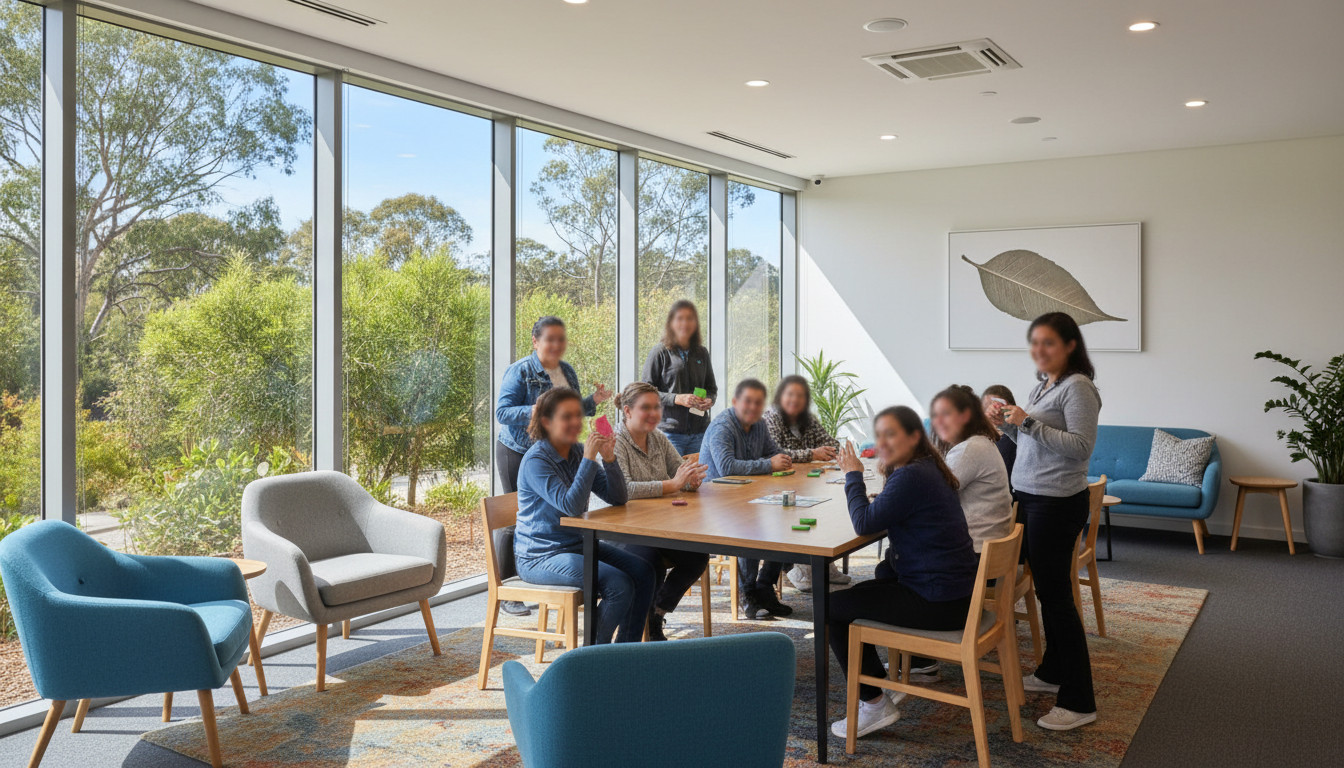
We work closely with participants to co-design social activities that align with their interests and goals. This might include joining a local art class, attending community events, participating in group fitness activities, or simply spending time in a park or café with the support of a trusted worker. We also support participants who are working towards community reintegration, providing gentle, consistent encouragement as they take steps back into social life.
Our commitment to quality is guided by the NDIS Practice Standards and the NDIS Code of Conduct, and we are accountable to the NDIS Quality and Safeguards Commission. This means that every support worker is screened, trained, and supervised to ensure they deliver safe, respectful, and effective support. We also provide regular feedback and check-ins to ensure that your social support continues to meet your needs and contribute to your mental wellbeing.
Frequently Asked Questions
Does NDIS cover social activities?
Yes. Under the NDIS (Supports for Participants) Rules 2013, social and community participation supports are funded within the Core Supports budget if they are reasonable and necessary to help you participate in social and community activities. This includes assistance to attend events, group activities, and community programs.
What is the difference between social support and community access?
Social support helps you build skills and confidence to engage with others, while community access provides practical assistance to participate in community activities. Both fall under Assistance with Social and Community Participation (support item 04) in your NDIS plan and are funded from your Core Supports budget.
Can NDIS social support help with loneliness?
Yes. The National Disability Insurance Agency (NDIA) recognises that social connection is essential to mental wellbeing. NDIS social support can fund activities that reduce isolation, build relationships, and help you participate in your community, which directly supports your mental health goals.
How do I know if I’m eligible for community reintegration support?
Community reintegration support is available if you need assistance to reconnect with your community after a period of isolation, hospitalisation, or significant life change. Your NDIS planner or Support Coordinator will assess whether this support is reasonable and necessary based on your goals and circumstances under the National Disability Insurance Scheme Act 2013 (Cth).
Can I use my NDIS plan for group activities?
Yes. Group-based social and community participation activities are funded under your Core Supports budget. The NDIS Pricing Arrangements and Price Limits set specific rates for group activities, which are often more cost-effective than one-on-one support while still delivering meaningful social connection.
This article is general information only and does not constitute NDIS planning or funding advice. Every participant’s situation is different. For guidance specific to your NDIS plan, contact a registered Support Coordinator or the NDIA directly on 1800 800 110.
Aus Care Community Services has been supporting NDIS participants across South West Sydney since 2017, delivering person-centred social support that builds genuine connection and strengthens mental wellbeing. Contact our team to discuss how we can help you achieve your social and community participation goals.
Registered NDIS provider serving South West Sydney and beyond since July 2017.